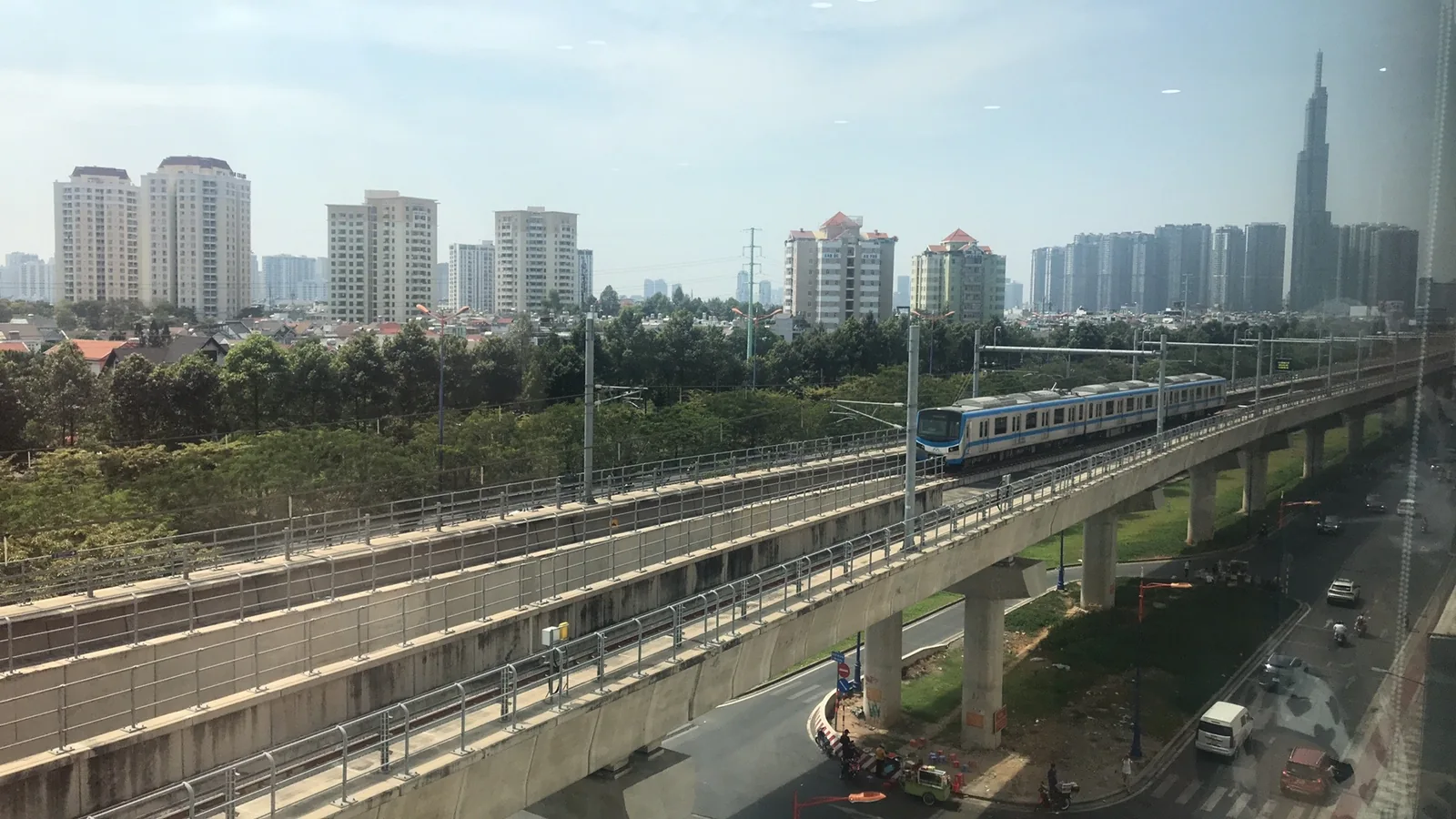
Ho Chi Minh City Metro Line 1 tickets cost VND 7,000–20,000 in cash or VND 6,000–19,000 with a supported cashless payment method, depending on the trip. The train connects Bến Thành in the city centre with Bến xe Suối Tiên in the northeast. Buy a single ticket at a station machine using Vietnamese đồng, or try a supported contactless Visa/Mastercard reader. If a card from your home country is declined, the ticket machine and station staff are the fallback. You do not need Vietnam’s VNeID identity app to buy an ordinary station ticket.
The 15 October 2026 addition of ticketing through VNeID, Vietnam's electronic identity app, is another option, not a requirement that tourists obtain a Vietnamese citizen ID. A valid station-issued ticket or successful bank-card entry is what you need.
Where the line takes you
The 14 operating stations are Bến Thành → Nhà hát Thành phố (Opera House) → Ba Son → Văn Thánh → Tân Cảng → Thảo Điền → An Phú → Rạch Chiếc → Phước Long → Bình Thái → Thủ Đức → Khu Công nghệ cao (High Tech Park) → Đại học Quốc gia (National University) → Bến xe Suối Tiên. The route runs about 19.7 km.
A visitor near Bến Thành Market can ride to Opera House or Ba Son for central sights. Someone staying in Thảo Điền or An Phú has a rail connection back to the centre, although getting from the hotel to the station still matters. The Suối Tiên Bus Terminal station is a transport stop, not a promise that a theme-park gate is immediately next to the platform.
Line 1 does not serve Tân Sơn Nhất airport. An airport journey still needs a separate road transfer. Neither projected future lines nor an old network map should be mistaken for today's operating service.
Real fares and when a day pass actually saves money
These are official price bands, not invented fares between named stations.
- Single ride paid in cash: VND 7,000–20,000, by distance.
- Single ride with an accepted cashless method: VND 6,000–19,000, by distance. Your foreign bank might add a separate exchange or transaction charge.
- One-day unlimited ticket: VND 40,000.
- Three-day unlimited ticket: VND 90,000.
- Ordinary monthly ticket: VND 300,000. The VND 150,000 student category has separate eligibility and is not a universal visitor discount.
Four short rides: If each journey actually costs the published VND 7,000 minimum in cash, then 4 × 7,000 = VND 28,000—VND 12,000 less than a day pass. Three longer rides: If each actually costs the VND 20,000 maximum, then 3 × 20,000 = VND 60,000, and the VND 40,000 day pass would save VND 20,000. Those are two transparent worked cases at the ends of the fare range, not a claim that Bến Thành–Thảo Điền costs either price.
Two adults taking two journeys each make four ticketed rides, so their total cash expenditure lies between VND 28,000 and 80,000 if the published single-ride bands apply. Timed passes are only a genuine alternative if you can actually buy one through an available app, ticket channel and payment method. Do not build a tourist budget around an identity-linked pass that you cannot access.
Buying a ticket without VNeID
Option 1 — cash at a station machine. Take Vietnamese đồng to a ticket vending machine (máy bán vé tự động) or kiosk. Choose your origin and destination, follow the displayed price, pay and use the issued journey ticket at the gate. If the machine cannot take your notes or the ticket fails, ask station staff (nhân viên nhà ga) for the working non-app method. Not every staffed counter still sells the old paper QR tickets.
Option 2 — a contactless bank card. City announcements have identified Visa, Mastercard and other EMV payment networks, including foreign-issued cards in the planned system, as supported payment methods at suitable gates. That does not certify your particular overseas issuer, card configuration or phone-wallet token. Follow the gate's entry and exit instructions using the same credential; do not assume that switching between phone and plastic card is recorded as the same ride.
If your foreign card is declined: do not keep tapping different devices at a crowded gate. Use VND cash at the station machine or ask the employee for the currently active non-app ticket channel. If a bank authorization appears but no journey is issued, retain a non-sensitive transaction reference for help rather than treating a pending charge as a ticket.
Five station cashier changes that tourists should know
On 1 November 2025, the operator stopped selling paper QR tickets at staffed counters at Thảo Điền, An Phú, Bình Thái, Thủ Đức and Khu Công nghệ cao. The city notice explicitly preserves automatic machines, kiosks, bank cards, wallets and the HCMC Metro app as alternatives, with station staff to help.
This was a 2025 five-counter change, not a 1 November 2026 system-wide ban on cash. An opening-week travel article telling you to queue for printed QR at every cashier is outdated.
What changed with VNeID in October 2026?
From 15 October 2026, eligible VNeID users can select the Metro service in the identity app, purchase a single or timed ticket using QR payment and present the issued QR at the turnstile. The October 2026 city press report says one QR is for one person, and describes a chip-ID-based monthly option. It does not establish that a short-stay visitor with only a foreign passport can register, nor does it say that station machines were discontinued.
If an app asks for an identity number you do not possess, do not fabricate one. A station ticket is a legitimate alternative.
Two journeys that go wrong—and what actually works
A couple at Thảo Điền have no local app. One overseas card is rejected. Because the paper-QR cashier option at Thảo Điền ended in 2025, the couple should use the vending machine/kiosk with VND cash, or ask station staff for an available ticketing machine. They need a valid ticket or entry for each passenger; one person's QR ticket cannot admit the whole family. This is a documented non-app route, not a guarantee that every machine or foreign bank works at every minute.
A visitor wants three trips across the central and eastern parts of the line. Three upper-band cash journeys are 3 × VND 20,000 = VND 60,000, while the published day pass is VND 40,000. Three lower-band journeys would be 3 × VND 7,000 = VND 21,000 instead. The actual station-to-station fares and a purchase channel accessible to the visitor determine the right product; an inaccessible time-pass app does not solve a payment problem.
If you're leaving late, use the station's current last-train notice for your travel day and direction. An independent local guide marks the timetable it held as expired August 2026, so we do not invent a November 2026 final train or guarantee a current frequency. Have a road option if needed.
Retain your ticket or the same tapped payment credential until you exit. If a gate rejects it, speak to staff rather than using somebody else's card. For onward travel, read our Vietnam transport guide and Vietnam living-cost examples.
Authentic photograph: HikariTenshi, Line 1 at Thảo Điền, 9 February 2025, CC BY 4.0, cropped/resized. It does not show today's ticketing status or timetable.
