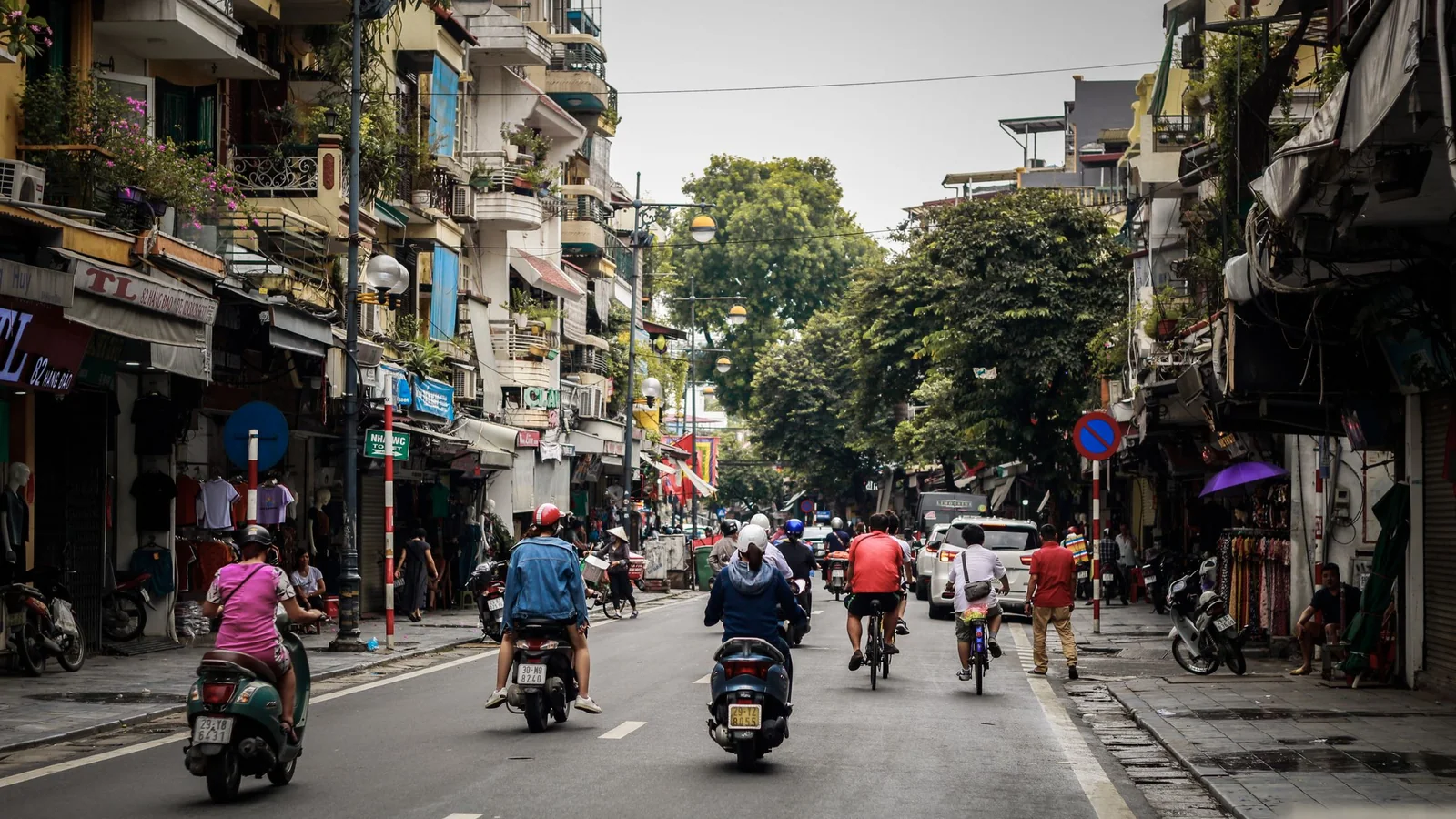
Vietnam rewards travellers who plan by region and actual travel time rather than only looking at distances on a map. Hanoi, Ho Chi Minh City and Da Nang have different local transport patterns; a multi-city route may combine rail, flights and road travel.
Decide the entire journey before you book
Suppose you land at Da Nang but your accommodation is in Hoi An. Booking the flight is only step one. Before paying for an onward activity or nonrefundable hotel night, write down: the airport exit, the address in Vietnamese, the transport option to that door, the expected pickup arrangement and a return option if the first driver cancels. If you arrive too late for your chosen transfer, compare a night in Da Nang with rearranging the onward trip.
For any flight, rail or coach comparison, use door-to-door time: travel to the departure terminal + check-in or arrival buffer + the journey + the final transfer. Obtain prices and change/refund conditions from the actual operator for your date; a short flight or low fare alone does not establish the best choice.
Planning Hoi An or Da Nang during wet months? Use our rainy-season booking decision guide to check disruption options and official warnings before committing.
City travel: plan the last kilometres first
For shorter urban journeys, look for established taxi or ride-hailing services, public transit where available and a walkable route at your destination.
- Hanoi: the Old Quarter's narrow streets and busy crossings make it worth confirming where a car can drop you off. Save the accommodation address in Vietnamese.
- Ho Chi Minh City: traffic and travel across districts can add uncertainty. Look at the real pickup point and your departure time rather than straight-line distance.
- Da Nang and Hoi An: confirm the specific city, beach or town you are actually staying in. A flight to Da Nang still requires a separate transfer to Hoi An.
For each city, check current rail or bus line routes rather than relying on a static transport map from an earlier year.
Between cities: train, flight or bus?
Vietnam Tourism's official transport guide describes domestic flights, trains and buses as different options for moving across the country. None is always best.
| Your priority | Start by comparing | What not to forget |
|---|---|---|
| Least total travel time on a long route | Domestic flight | Airport transfers, baggage, check-in and delays |
| Overnight or scenic overland journey | Train | Class, sleeper arrangements and arrival station |
| Lower-cost routes or smaller destinations | Licensed intercity coach | Departure terminal, comfort and stops |
| Several towns in one region | A mix of train and local transport | Number of hotel changes and transfers |
A domestic flight with a short airtime can still consume much of a day when you include airport access and check-in. A train may be convenient for a night journey, but the right decision depends on the route and the service actually available.
Booking a rail trip
- Choose departure and destination stations, not only cities.
- Compare the specific train, travel time and seat or sleeper class.
- Check baggage, luggage storage and station arrival requirements.
- Confirm the issuer and payment channel before providing card details.
- Avoid building a tight transfer immediately after an overnight journey.
- Save your booking offline; check the return route before leaving a remote destination.
Connection failure example: If an overnight train is due into Huế and you have an onward flight the same morning, check the actual arrival station, how you will reach the airport, check-in closure and what happens if the train is late. If missing that flight would be expensive, choose a different flight time or add an overnight buffer rather than assuming the connection is protected.
Do not rely on a single published sleeper fare or schedule when planning months ahead. Availability can differ by weekday, season and service.
Crossing streets and renting motorcycles
Urban traffic may involve many motorcycles and mixed road users. Use marked crossings where possible, watch carefully and do not assume vehicles will stop as they might in your home country.
Before renting or riding a motorbike, check licence validity, local laws, insurance cover and protective equipment. A shop agreeing to rent a vehicle does not itself establish that you are legally entitled or insured to drive it. Travellers without suitable cover should use another way to get around.
Plan a north-to-south itinerary without rushing
Start by choosing which experiences matter most: Hanoi and the north, central Vietnam, or Ho Chi Minh City and the south. Then add realistic travel days. A trip with too many one-night hotel stays can become a transport exercise instead of a holiday.
Keep flexibility for severe weather, especially where road and sea travel can be disrupted. For overnight journeys and connections with flights, build in a backup option.
Use the official tourism and carrier websites below for current route availability, booking instructions and operational changes.
Before paying for a nonrefundable connection
A ticket is only useful if the whole journey works. For your actual route, keep these details beside the booking:
- Departure and arrival: The exact terminals or stations, pickup location and final street address.
- Door-to-door time: The journey plus luggage, check-in, waiting and transfers.
- Ticket conditions: The real operator and its change, cancellation and baggage rules.
- Motorbike plans: Licence validity for the vehicle category and insurance that covers the ride, if you intend to drive.
- A missed connection: A workable alternative if the train, flight or road transfer is delayed or cancelled.
For anything still uncertain, contact the operator or your accommodation before buying a nonrefundable connection. An old route map cannot promise today's timetable.