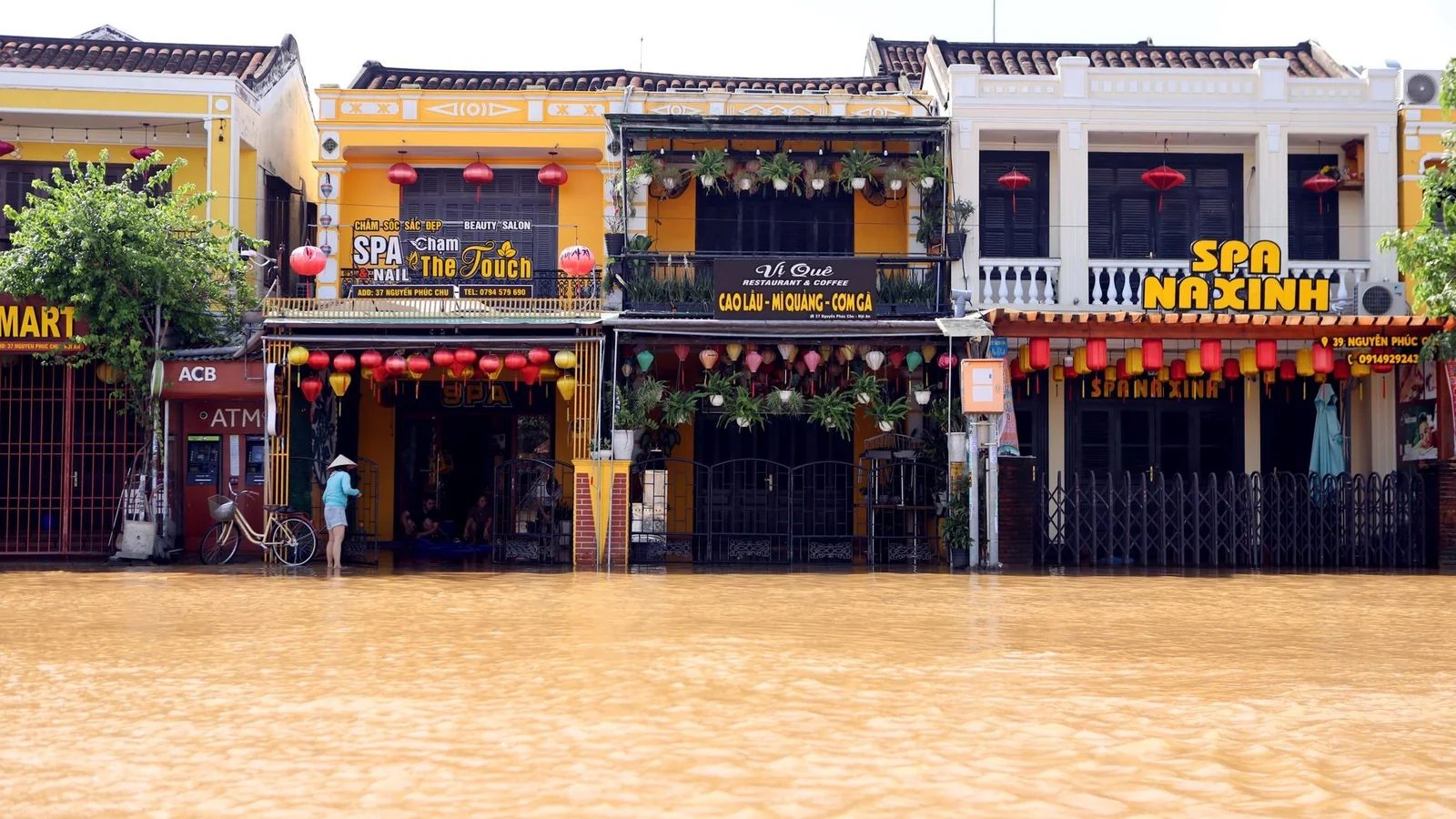
The right question is not simply whether Hoi An gets rain in your travel month. It is whether the trip would still be worthwhile if your beach day, countryside ride or excursion had to change.
Vietnam's official tourism climate guide describes Hoi An's rainy period as September to January, with storms and flooding a concern particularly from September to November. (Vietnam Tourism: weather and climate) That is seasonal context. It is not a forecast for your dates, a guarantee of disruption or evidence that any particular hotel is safe from flooding.
Start with your priorities, then decide how much flexibility you need.
Decide what would make the trip worth taking
| Your main purpose | What rain would change | Sensible booking approach |
|---|---|---|
| Food, museums, workshops and time in town | Getting between venues and local access may be affected | Choose accommodation you would be comfortable spending time in; keep individual activities adjustable |
| A short beach holiday | The central purpose may be lost even without major disruption | Compare dates or destinations before committing to non-refundable bookings |
| Cycling, rural stays and outdoor excursions | Routes and operations may change | Avoid making every day dependent on one weather-sensitive activity |
| A family trip or travel with mobility needs | Wet access, steps and disrupted transport may be especially difficult | Ask detailed access questions and preserve an easy alternative day |
| A fixed event or onward connection | You may have little freedom to wait or change plans | Give transport and accommodation flexibility more weight than a small fare saving |
These are editorial planning choices, not predictions. Two people travelling in the same week can reasonably make different decisions because the consequences of rain differ.
A monthly weather chart cannot answer three crucial questions
A climate summary helps with choosing a season. It does not tell you:
- Whether there is a warning during your actual stay.
- Whether the route between your accommodation and planned activity is usable.
- Whether a particular operator is running a service.
Near departure, use the National Center for Hydro-Meteorological Forecasting for current warnings and forecasts, then confirm local conditions with your accommodation and transport providers. (Vietnam meteorological warning service) Read the issue time, validity period and affected area. A warning found through a search engine may be old.
Check the area and route involved, not just a weather icon labelled “Hoi An” or “Da Nang.” An airport arrival, a rural excursion and access to a riverside hotel are separate decisions.
If an official warning or local instruction affects your route, follow that instruction. Do not use a favourable monthly average to dismiss it.
Ask the hotel about access, not only the room
A room above ground level does not answer whether you can reach the entrance, get a meal or leave for the airport.
Before making a non-refundable reservation, ask:
- Which road and entrance would normally be used to reach the property?
- How does the property communicate if access is disrupted?
- What alternative access has it used, and who decides whether it is suitable?
- What happens to check-in if transport cannot reach the property?
- Are food and drinking water available on site if going out is impractical?
- What is the arrangement if electricity or communications are interrupted?
- What does the booking's actual change or cancellation policy cover?
- If travelling with reduced mobility, what steps, lifts and exposed paths are involved?
Request specific answers. “We are open all year” does not answer an access question. Nor should a past guest's successful visit be treated as a guarantee for yours.
Do not travel through floodwater to preserve a booking. Seek current local instructions and contact the accommodation or carrier about alternatives.
Compare Hoi An and Da Nang by your itinerary
Do not choose between them on a blanket claim that one is “safe in the rainy season.” Conditions vary by neighbourhood, property, route and event.
Compare the tasks each base makes easier:
| Question | Why it changes the choice |
|---|---|
| Where are most of your booked activities? | Each extra transfer adds a journey that may need changing |
| Where does your onward flight or train leave? | A final night close to the departure point may simplify the plan, but does not guarantee access |
| Which property has the clearest disruption arrangements? | Practical support matters more than a vague weather reassurance |
| What can you do comfortably without a long excursion? | Your alternative day should still suit the group |
| Are you willing to move hotels? | A split stay adds packing and a transfer; it is useful only if it solves a real problem |
For broader connections, see transport and getting around Vietnam.
Build a flexible five-night plan
Here is an invented planning example for travellers whose priority is food and culture rather than beach time. It is not a recommended itinerary during a warning.
- Night one: settle into the chosen base without a tightly timed evening excursion.
- Middle days: keep a small list of activities that can be booked or confirmed close to the day. Include options within easy reach of the accommodation.
- One optional outdoor day: confirm the operator's decision process and change terms before paying.
- Final night: choose its location based on the onward journey and current conditions, rather than automatically adding another sightseeing stop.
The useful feature is spare capacity: a missed activity does not have to be squeezed into the last morning before a flight.
If your group would find this version disappointing, choose a different period or compare another destination's own climate and transport conditions. Vietnam does not have one uniform rainy season; moving elsewhere requires a new check rather than assuming “south” or “north” means dry. (Vietnam Tourism: weather and climate)
Read cancellation terms before you need them
Record who sold each booking, its last free-change date, what happens after that date, and the contact route if a service is cancelled.
Ask the insurer about the actual policy wording if weather disruption is a concern. Rain, an official warning, a carrier cancellation and being unable to reach accommodation are different situations. Do not assume they produce the same refund or insurance outcome.
Use a simple booking register:
| Booking | Last flexible date | Contact | Alternative if disrupted |
|---|---|---|---|
| Accommodation | |||
| Flight or train | |||
| Transfer | |||
| Excursion |
A small discount is not necessarily a saving if it removes the ability to change the part of the trip you are most uncertain about.
Your decision before paying
Book when the trip still makes sense with your fallback activities, the accommodation has answered practical access questions, and you understand what you can change.
Keep plans provisional when the main appeal depends on outdoor conditions and you can wait for more relevant information.
Change the plan when official instructions or an operator's current advice make the intended journey unsuitable. A checklist helps organise a decision; it cannot make a disrupted route usable.
For medical preparation and insurance questions beyond booking terms, see healthcare and insurance in Vietnam.