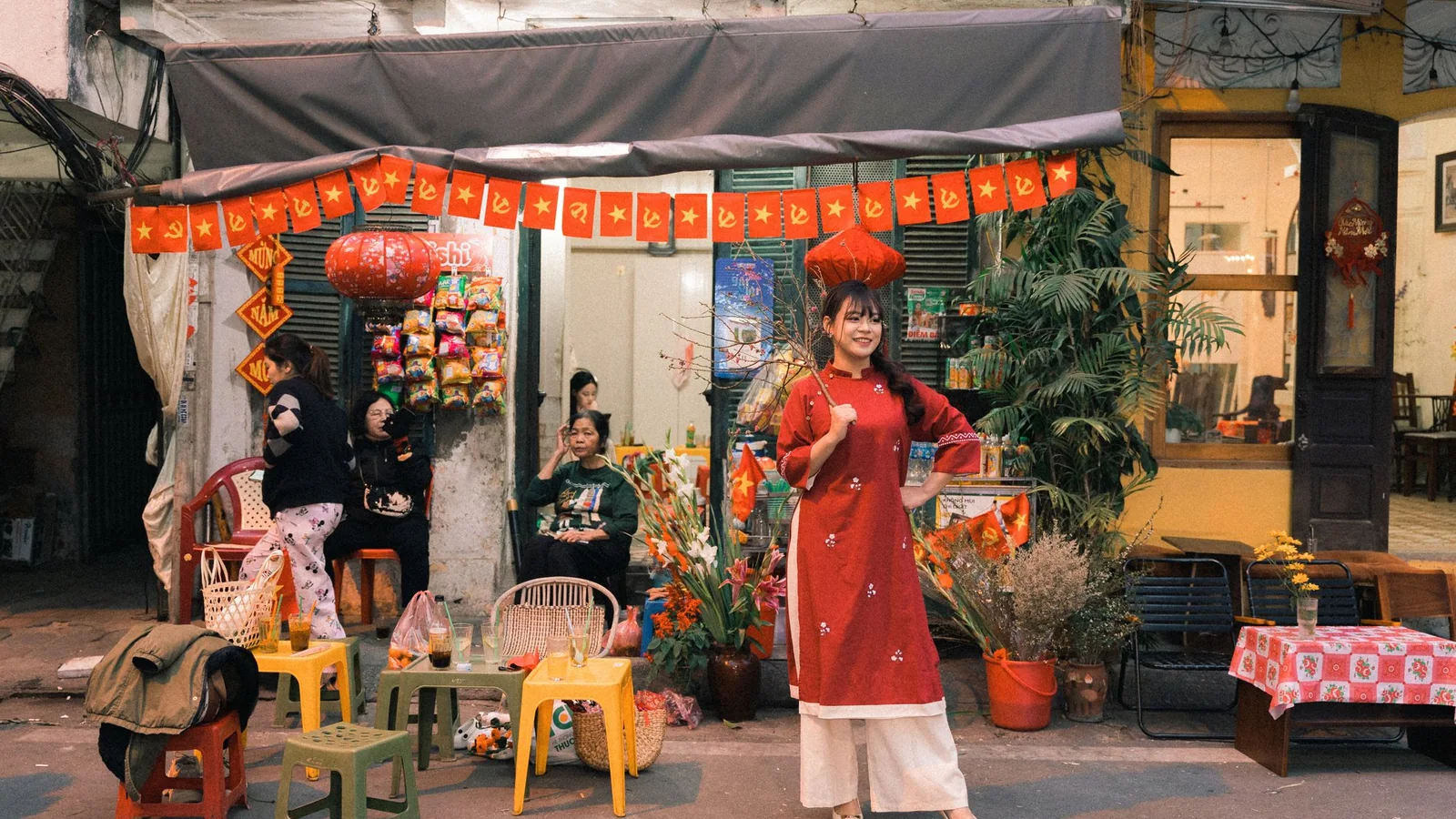
Tết (Tết Nguyên Đán) is Vietnam’s Lunar New Year, the country’s most important family celebration. Families return home, honour ancestors and welcome a fresh start. It can be a memorable time to visit—especially for the decorations, festive food and traditions—but travel and daily services do not run like an ordinary week. A confirmed hotel room does not mean a nearby restaurant or transfer operator will be open.
For Lunar New Year 2027, the officially announced break for public employees is 4–10 February 2027. The first day of the lunar new year is 6 February 2027. Private employers can choose different statutory holiday arrangements; a family-run café, pharmacy or tour operator may close longer or shorter than the public offices. Plan around the individual service, not a blanket claim that the country closes for seven days. Vietnam's Ministry of Home Affairs announced the dates, and the Government's detailed notice distinguishes public-sector leave from employers' choices.
What happens during Tết—and is it a good time to visit?
In the days leading up to Lunar New Year, streets and homes fill with flower displays, peach or yellow apricot blossoms, kumquat trees and red-and-gold decorations. Families clean and decorate homes, prepare festive meals, visit relatives and honour ancestors. Traditional foods include bánh chưng (square sticky-rice cake) and bánh tét (a cylindrical version); children may receive lì xì, small lucky-money gifts. Larger cities sometimes organise flower streets, lion or dragon dances and fireworks. Specific public events and fireworks for 2027 need to be checked against city announcements; none is guaranteed by this guide. The Vietnam National Authority of Tourism explains these customs.
Why visiting can be wonderful: festive colours, flower markets, special foods, the chance to see a deeply meaningful local celebration and—once people have travelled home—quieter streets in some big-city areas. You can enjoy these without needing an invitation to a private family gathering.
Why it can be harder: tickets on homecoming routes may sell out, some restaurants and attractions change hours, smaller shops may close, and tour drivers or other services can be harder to arrange. The busiest travel days and the quietest city days are not necessarily the same. If your holiday depends on visiting many cities or finding a specific service open each day, the trade-off matters.
Who should go? If you value local culture and can keep meals and sightseeing flexible, Tết may be a highlight. If you need predictable restaurant hours, effortless intercity transfers or multiple timed tours, a week before or after the core holiday may suit you better. Your actual dates and destinations still determine what operates.
Choose the trip you actually want
| Your plan | A better approach | What might go wrong |
|---|---|---|
| See Hanoi or Ho Chi Minh City without moving hotels | Choose a base with confirmed meals, walkable streets and an arrival transfer | Your favourite street-food stall, attraction or bank branch may be closed even while the hotel operates |
| Travel between Hanoi, Huế, Da Nang and Ho Chi Minh City | Search real train/flight departures for the exact date and direction before committing to a multi-city hotel plan | Homecoming demand, sold-out seat classes, longer station queues and separate-ticket delays |
| Visit a rural area or smaller town | Confirm the last-leg driver, accommodation check-in, food access and return trip individually | Fewer operating drivers and shops can matter more than the intercity ticket |
| Arrive for a fixed tour, cruise or international flight | Leave meaningful time between independently booked legs; consider an extra night near the departure point | A cancelled or late connection can make a cheap non-refundable itinerary very expensive |
| Stay with Vietnamese family | Ask your hosts about meal and transport expectations, and local customs | Household schedules and family visits may not match your usual sightseeing plan |
The official Vietnam Tourism Tet guide describes homecoming demand and businesses closing during the first days. That is useful seasonal context, not a live availability check for any specific hotel, train, ATM or restaurant.
Trains: Tet 2027 tickets are already on sale
This is one reason not to rely on old articles that say tickets “will open soon.” Vietnam Railways opened its 2027 Tet individual ticket sales on 5 September 2026, for holiday-period North–South services running roughly 23 January–25 February 2027. The operator announced an initial sale of approximately 300,000 tickets and a maximum of 10 tickets per person per direction in one purchase. These are historical sales announcements, not evidence that seats remain today. Vietnam Railways' 2027 ticket announcement.
Before choosing a rail trip:
- Search the exact departure and destination stations, date, class and passenger information through the Vietnam Railways booking portal or another channel the operator itself recognises.
- Compare a train that arrives early morning with a day service, including hotel checkout, luggage and getting to the next destination.
- Keep the ticket issuer's change, refund and passenger-name conditions. A screenshot of a reseller's timetable is not proof of a confirmed seat.
- If an overnight train feeds a separate domestic or international flight, check flight check-in closure and the airport transfer. These tickets may not protect each other.
Example: Hanoi → Da Nang just before Tet. Do not pay for three non-refundable Da Nang hotel nights first and assume a sleeper berth will be available afterward. Find an actual acceptable train or flight and the total door-to-door plan; if none is suitable, reverse the order of cities or stay in one region longer. For general station, bus and flight comparisons, use our Vietnam transport guide.
Flights, buses and transfers need separate confirmation
Unlike the public holiday calendar, flight seats and bus schedules change by route and operator. Look up the real airline or coach service for the date and verify its baggage and cancellation conditions. A domestic flight that still operates may be unattractive once you add airport time, scarce last-mile transfers or an arrival after your hotel kitchen has shut.
When making a connection, save the local-language name and address of the station or pickup point and confirm your driver can collect you at that hour. If an operator changes the departure point, a pre-booked taxi to the old terminal will not solve the connection.
A bus or car transfer on a separate ticket is not automatically guaranteed because a flight was delayed. Ask the vendor about the missed-connection procedure before paying, especially if you are arriving from abroad. If you need a guaranteed pickup, obtain the actual written arrangement and emergency contact; never treat “24-hour reception” as proof of 24-hour transport.
Restaurants, banks and daily essentials
The public holiday applies to government workers under the published schedule. Private-business hours are a different question. The national tourism authority warns that eateries and businesses commonly close for several days; which ones do so can vary from neighbourhood to neighbourhood.
- Food: before paying for a non-refundable stay, ask whether your own hotel serves breakfast and dinner on each of your exact dates. Identify one alternative grocery shop or restaurant and check its hours close to the date. A listing marked “open” year-round may not reflect Tet.
- Medicine and health: if you need regular medication, arrange an adequate legal supply and any required prescription documentation before the break. Ask your insurer and accommodation which nearby medical facility provides urgent care and what they do if their usual clinic is closed. Do not assume a particular pharmacy is open because hospitals provide emergencies.
- Money: keep a reasonable amount of Vietnamese dong for ordinary small purchases, plus an alternate payment method. Some ATMs, cards and digital payment networks may still work while a bank branch or customer-service desk is closed; no particular machine's cash availability is guaranteed. Avoid carrying an excessive cash reserve.
- Mobile data and communication: set up your SIM/eSIM and working hotel contact before a late arrival, and save confirmed tickets offline. Check whether your chosen tour provider actually has holiday-period support.
- Work or administrative errands: if you need an immigration appointment, banking verification or a paper issued by a government office, do it ahead of the official 4–10 February break or check that office's own appointment calendar. Do not assume all government procedures continue as usual during the break.
Two different travellers: A visitor staying five nights in central Hanoi may be happy with a quieter city, an open hotel restaurant and the flower displays. A new resident relying on a specific bank branch, medication refill and an office appointment should finish those errands first. The same dates have very different consequences.
Enjoy the celebrations without disrupting family customs
Say “Chúc mừng năm mới” (“Happy New Year”) when greeting people, and treat family reunions as private unless you are invited. The first visitor to a home in the new year can be culturally significant, so don't turn up unannounced. Enjoy public flower displays, food and celebrations where they are actually operating, and check the specific city's current programme rather than assuming last year's events repeat. Vietnam's national tourism authority offers visitor etiquette guidance.
If the streets seem quiet, that may reflect families celebrating together—not that an entire city has shut down. Plan meals and activities using the actual venue's holiday hours.
A sensible booking order for Tet 2027
If you are planning now, in late October 2026: choose your essential intercity route first, because Tet train sales began in September. Check the actual live ticket, then select a hotel that confirms check-in and meals. Next arrange airport or station pickup and any fixed activities. Leave optional sightseeing flexible.
If your trip is already booked: review each ticket against your real itinerary, identify tight unprotected connections and confirm meals, medication and local transport. If an essential service is uncertain, change that part of the plan while refund or cancellation terms still allow it.
If you only want a relaxing holiday, spending longer in one base may be better than forcing four cities into a festive week. The goal is to experience Tet—not to spend it worrying about the next bus.
Before you leave: retain an actual confirmed transport ticket, check each service's holiday-specific opening hours, arrange essential medication and payment options, and keep at least one usable fallback. The 4–10 February public-sector dates are verified; the operating hours of the businesses you personally need still have to be checked with them.